
4 Comments
Round Table on “Lessons learned from water conflicts for a future of cooperation and peace”7/4/2017 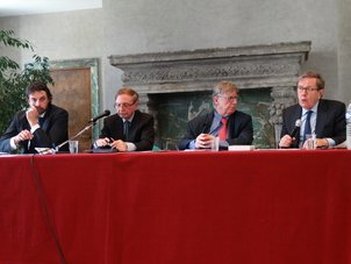 Hydroaid was invited to take part in a Round Table organized by the “Maison d’Italie”, one of the students’ halls of residence of the “Cité Internationale Universitaire de Paris”, the international university campus established in 1925 closely linked to Paris universities.
The panel of speakers included Ambassador Luigi Cavalchini, President of Hydroaid; Ambassador Giancarlo Leo, former Representative of Italy to UNESCO and Mr Gian Luca Beruto, who recently joined the Hydroaid team. The discussion was moderated by prominent Italian correspondent, Alberto Toscano. The Round Table took place on 25 March and was introduced by Mr. Roberto Giacone, Director of the “Maison d’Italie”. Ambassador Giandomenico Magliano, Italian Ambassador in Paris, formally opened the discussion. The Round Table focused on a crucial topic: “Lessons learned from water conflicts for a future of cooperation and peace”. The debate gave an overview of water-related conflicts throughout history, focusing on water disputes in certain regions of the world such as the Middle East and Africa, where several hot spots reveal how much water is a fundamental resource for human development. Over the last sixty years water has been the cause of 40% of conflicts. The situation is extremely complex. Although the surface of the globe is made up of 71% of water, less than 3% of the reserves is drinking water, 2.2% of which is trapped in glaciers or contained in aquifers. Less than 1% of the water on earth is then left to meet the needs of 7 billion human beings, as well as animal and plant species. Nine countries share 60% of the world's water supply, 28 suffer from chronic water shortages and 80 are subject to one-time shortages. By 2050, at least one person in four will live in places where the lack of drinking water is chronic or recurrent while climate change will aggravate these difficulties, particularly in the water basins common to several countries. These considerations imply respect for a fundamental principle: to make the best use of water resources in respect of both environmental sustainability and equitable sharing. The panelists also discussed the most important challenges related to water management, particularly the links between water resources; problems concerning its management, use and access; and migratory flows and conflicts. In the current international context where we are witnessing the largest migration flows since the Second World War – the volume of migrants has in fact tripled in the last thirty years – and water crises are highlighted in the reports of several international agencies and organizations, the importance of understanding the links between water resources and migration flows has become indispensable. Water scarcity is becoming increasingly problematic also because of the climate changeaffecting the planet. The problem of population displacement as a result of climate change is increasingly seen as one of the major crises of our time; although to date these concerns tend to be viewed as peripheral. However, the assumed size of the phenomenon, with a possible prediction of one billion displaced persons in the future, has now placed the problem among the most burning issues on the world political agenda. The only way to deal with these concerns more constructively and strategically, with the future in mind, is through the promotion and creation of instruments of cooperation in the field of water management. Cooperation – at governmental, regional, and inter-agency levels – must be placed, therefore, at the core of current debates with a view to encouraging effective and shared public policies aimed at a more balanced water resources management respectful of fundamental human rights. There are already a number instruments whose purpose is to promote cooperation in this field – the Nile Basin Initiative and the Agreement between Israel, Jordan and the Palestinian National Authority to combat the contraction of the Dead Sea and provide safe drinking water in the region – but it is crucial to understand that these instruments are likely to be conceived with obvious intrinsic limitations in terms of effectiveness if the approaches that lead to their formulation do not take into account an effective conversion of perspective, with strong focus on the concepts of sustainability and respect of fundamental human rights, aimed at a shared and equitable water resource managemen The challenges of environmental planning and economic regulation are increasingly intertwined and relevant for the achievement of truly sustainable development in a rapidly changing world. A cross-cutting strategic and operational approach is needed to tackle these challenges. For this reason in 2017 Hydroaid launches a brand new e-Learning course on Sustainable Planning and Economic Regulation of water services in partnership with Fondazione per l'Ambiente T. Fenoglio Onlus and HYDRODATA. The course is realized with the financial support of Fondazione CRT within Project HaND - Hydroaid Network Development for Water and Sanitation Services. Bring your expertise to the next level and connect with professionals operating for SDGs worldwide: join now!
Duration: 13th March - 4th June 2017 Language: English Fee: None Beneficiaries: Max 80 Professionals operating in the fields of water and sanitation management with responsibilities of planning, financial administration, investments and/or tariff-setting from developing and emerging countries. Ideal candidates of this course are managers of local, regional or national Authorities in charge of water services, decision makers, NGO practitioners involved in the water cycle, water company officials To apply: Download and read the documents below Fill and send the Application Form below to tutor.sanitation@hydroaid.it together with a copy of your ID/passport and highest education certificate A new course dedicated to Sustainable Planning and Economic Regulation will soon be released in Hydroaid Distance Learning Program. The course will be 12 weeks long and it will address operators - managers, planners, professionals - involved in the management of local environmental resources for sustainability and development, with a special focus on water. A Call for Applications will be announced shortly. Meanwhile, we invite you to spread the voice to potential candidates and stay tuned for updates!
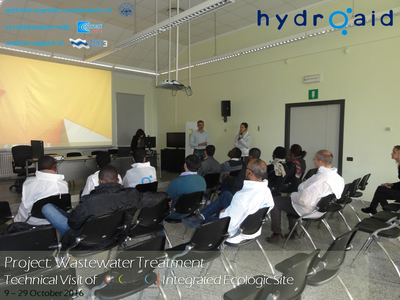
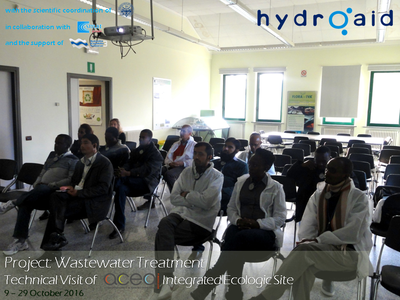
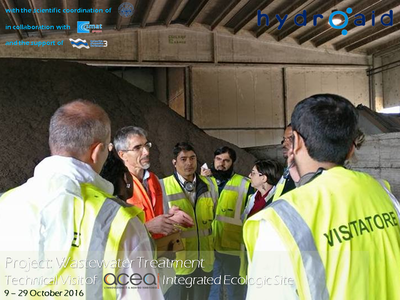
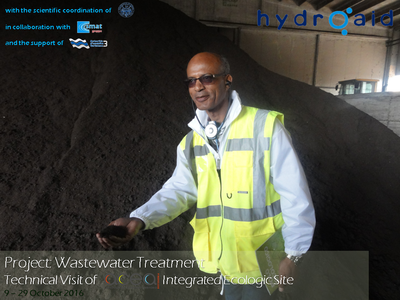
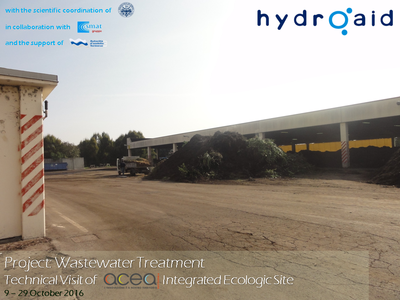
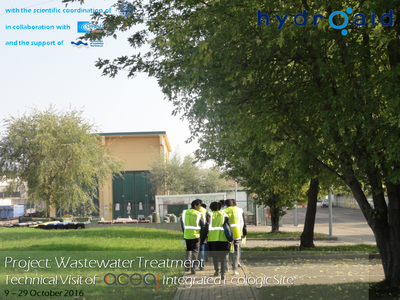
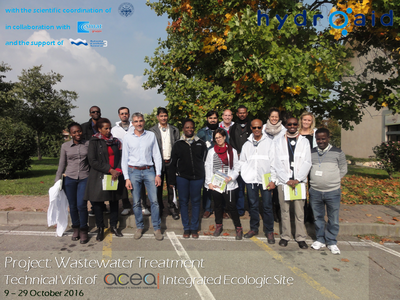
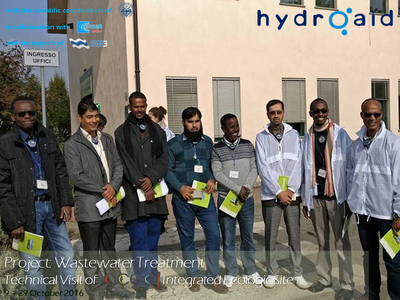
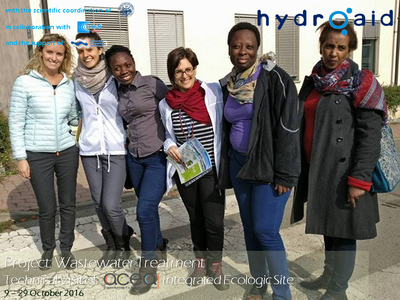
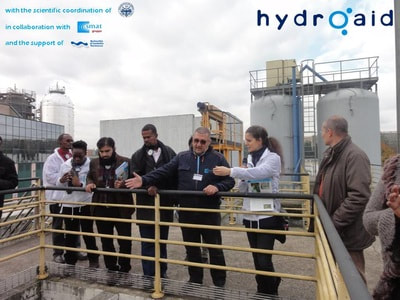
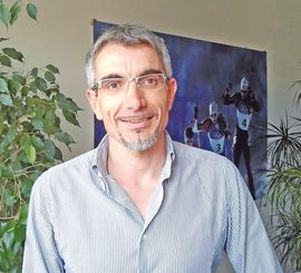 On October 20, 2016, the 11 experts participating in the traineeship of Project "Wastewater treatment: technical solutions and infrastructure management for developing countries with severe environmental vulnerabilities” visited the Integrated Ecologic Site of Acea Pinerolese Industriale Spa. The project is an initiative of Hydroaid realized with the financial assistance of the International Cooperation Fund of ATO 3 “Autorità d’Ambito n.3 Torinese” (the Water Authority of Turin) in partnership with Politecnico di Torino and SMAT with the goal of ensuring better sanitation services by providing managers and technicians with tools for designing, managing, monitoring and assessing all phases of wastewater treatment. For this purpose, the project relies on the collaboration with local specialised institusions, such as Acea, a modernmultiutility performing a broad range of services for Municipalities, Companies and the citizens. Among these are the water management, including the entire integrated water cycle, energy production, with distribution of methane gas and district heating, as well as urban organic waste collection, treatment and disposal. We interviewed Eng. Marco Avondetto, Head of the Environmental Department of Acea Pinerolese Industriale Spa, to learn more about the utility’s commitment for development cooperation.
Acea Pinerolese Industriale Spa is an affirmed leader in the management of the integrated cycle water-waste-energy. The Ecologic Site of Pinerolo is a model in Europe thanks to constant innovation and attention to sustainability. How does the mission of ACEA match the cooperation initiatives promoted by the local territory? I need to bring you back in history to answer this question. Acea was founded several years ago as a consortium of Municipalities. At that time our waste department relied exclusively on the landfill and a very simple collection service. Eventually separate waste collection systems were introduced we and focused on the challenges of organic waste products. Ever since the beginning, we wanted to cooperate with the local territory; this is why we realized a plant that would serve the surrounding 47 Municipalities. Later on, we understood that was not enough. The Province of Turin was unable to deal with the increasing amount of organic waste produced there, so our site was expanded to the point it became a reference center for a clearly larger operational scale. Today we deal with the waste produced by one million inhabitants, that is to say about half of the Province of Turin delivers here its organic waste. Another important feature that makes our structure unique is the level of integration: the Integrated Ecologic Site concretely connects different infrastructures in a way that is rarely seen and cast a great visibility to our work.
Over the years, Acea consolidated the expertise and infrastructure required for an effective management of water, waste and energy as a multiutility. In developing and emerging countries, these represent top priorities but their development is often precluded by limited investment capacities. How can a model of integrated management similar to Acea’s be replicated in contexts characterized by growing pressures on natural systems and frail economies? This is a complex question and its answer isn’t simple either. I must admit that the Italian framework in the waste sector, especially in terms of local regulation, is based on the idea that disposing of waste products corresponds to a given cost. As a result, delivering waste to plants such as ours implies the payment of a tariff to compensate the operational costs of the plant processes. Replicating this mechanism in other areas, poorer countries, might not be easy due to lack of funds. In addition to this, there are hygienic and sanitary issues to face. As an example, if waste is currently disposed in unmonitored sites, the first step to improve the situation should be the creation of controlled disposal areas and eventually it will be possible to set up specific waste categories chains. The existence of treatment plants specialised in specific waste categories is another key element that should be explored. On the basis of these preliminary conditions, more complex centers - such as ours in Pinerolo - can be established, as they are technologically advanced and require the payment of a tariff In the past years, the participants of the courses held by Hydroaid benefitted in multiple occasions from the experience of Acea through visits of its Integrated Ecologic Site and lectures by its experts. Do you think this collaboration contributed positively to the international standing of Acea and the local territory in a sector where efficient and environment-friendly governance systems are of the essence in supporting sustainable development? . Our collaboration was certainly useful and offered us a good visibility at the local and international level, but I believe the opportunity of sharing our experience to professionals from other countries was even more productive. Only a few minutes ago I mentioned to an Ethiopian visitor that such integrated centers can be established only provided that a tariff can be paid. In response, he told me that one of the reasons they engage in this kind of training is to learn and assess possible solutions, in order to identify which can be best reproduced in their country. At the moment they are testing an incinerator, but intend to implement of waste categories chains. We hope that such exchanges will point at an integrated waste management system, adequate to different contexts, that will avoid the mistakes already experiences by others in the past.
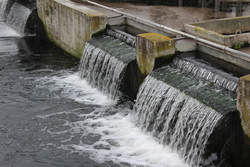 The project “Wastewater treatment: technical solutions and infrastructure management in developing countries with severe environmental vulnerabilities”, realized with the financial assistance of the International Cooperation Fund of ATO3 (the Water Authority of Turin), will bring the top organizations for integrated water and waste management of the local system to share experiences for sustainability. The initiative, led by Hydroaid - Water for Development Management Institute - in collaboration with SMAT and the Department of Environment, Land and Infrastructure Engineering of Politecnico di Torino, has the goal of ensuring a better management of public services connected to water depuration by providing managers and technicians from countries with a low access to sanitation the tools for designing, managing and monitoring water resources - a hot issue in the 2030 Agenda for Sustainable Development.
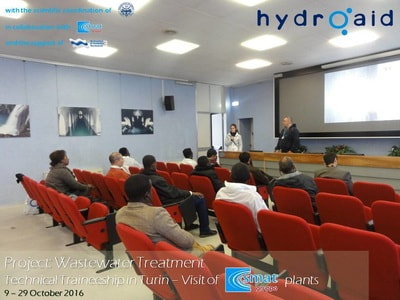
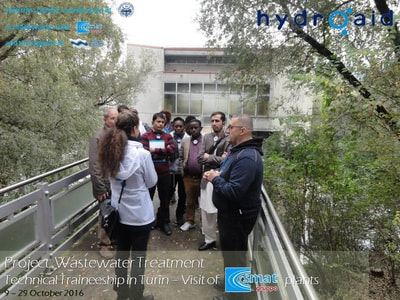
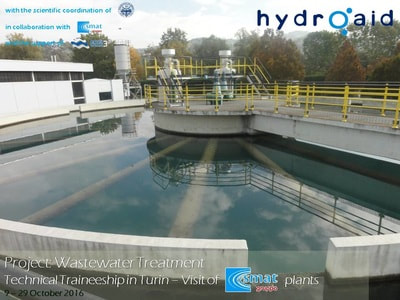
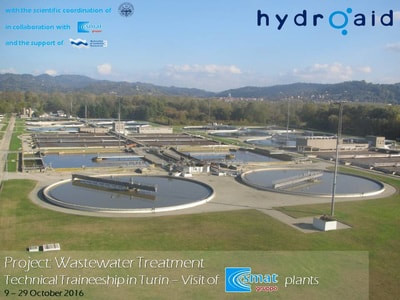
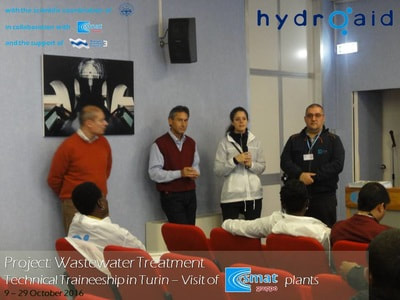
Following a distance learning course of 16 weeks for 87 operators from 24 different countries, the best 11 candidates were selected for an intensive training in Turin of 3 weeks from 9 to 29 October 2016. They will be responsible for contributing to the improvement of the quality of water services, living conditions and environmental impacts in their countries of origin. The selected participants are from Burkina Faso, Ethiopia, Kenya, Sudan, Zambia, Uganda, Afghanistan, Pakistan and Nepal and they work in public institutions with competences in the field of wastewater treatment. During the 3-week-training in Turin, the group will visit the depuration and wastewater treatment plants of SMAT S.p.A., leader utility in the field of integrated water management; the establishment of Collegno where Barricalla S.p.A. administers the largest disposal site for special waste products (hazardous and not hazardous) in Italy and a solar farm; the waste-to-energy incineratormanaged by TRM S.p.A. (Trattamento Rifiuti Metropolitani) operative since 2014; the selection center for plastic packaging waste Demap S.r.l. (Beinasco); and the plant of Acea Pinerolese Industriale S.p.A., multi utility structure for the entire waste management cycle. In addition to this, the program will be integrated by the involvement of the Metropolitan City of Turin (Office of the Integrated Waste Cycle) and Fondazione per l’Ambiente (Foundation for the Environment) that will complete the framework of skills and tools needed to manage and conserve a fundamental common good.  Congratulations to all 84 participants of the e-Learning course "Wastewater Treatment and Management of Urban Solid Waste - 2016" (Module 1 and Module 2), the first phase of the Project "Wastewater treatment: technical and managerial solutions for developing countries with severe environmental vulnerabilities" realized with the financial assistance of ATO3, the Water Authority of Turin. With 1340 relevant posts and 269 thematic discussions, this program set new records of participation and filled the past 16 weeks with important exchanges and experience sharing. Participants who scored a final grade of at least 65% will qualify for the Certificate of Attendance, which will be sent via e-mail in the next weeks. The top 10 candidates from the target countries of the Project (Afghanistan, Ethiopia, Cambodia, Kenya, Myanmar, Nepal, Pakistan, Sudan, Uganda, Zambia) will also be contacted for accessing Phase 2: a3-week-traineeship in Italy to strengthen the knowledge on Wastewater Treatment and Management of Urban Solid Waste acquired during the e-Learning Phase. The final ranking will be available shortly.
"I thank Hydroaid and all of the tutors for this interesting course, which gave me the possibilities for teaching to some masters degree students juste after the end of the first Module. One University in my country solicited me to teach their student on wastewater beacause I explained them the very important course contents. I take this opportunity to thank you all for every contribution throughout Module 1 and 2. It was really helpful, especially in sharing different experiences from different countries. I hope we continue our connection for further support and other concerns Dear Fellow Participants and Tutors, I am so happy to express my heart-filled gratitude for the opportunity to tap into this pool of knowledge. My colleagues would agree with me that this course has really been successful. It has not been easy, especially combining it with field work where the internet is highly unstable. All in all, I am glad to be part of this very essential course. I wish all of us can have the opportunity to continue at Turin. Thanks folks and Tutors. Its been nice reading all the post, suggestions and ideas deposited on the platform. We shared a lot of valuable experiences though we are so distant, thanks to Hydroaid that led the learning environment as if it had been a live class room. I would have never imagined such an interesting distance trainint. Shortly it was awesome and I am already going to miss you all. Wish you all the best and share BIG THANKS TO HYDROAID. It is a privilege and a great honor to be part of this marvelous team in sharing expertise ideas and solutions in the field of solid waste management and watewater treatment. It had been a wonderful journey since the start of the cours 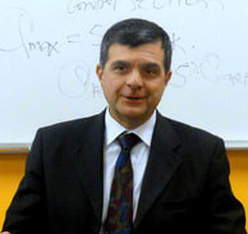 The project “Wastewater treatment: technical solutions and infrastructure management for developing countries with severe environmental vulnerabilities” is an initiative of Hydroaid realized with the financial assistance of the International Cooperation Fund of ATO 3 “Autorità d’Ambito n.3 Torinese” (the Water Authority of Turin) with the goal of ensuring better sanitation services by providing managers and technicians with tools for designing, managing, monitoring and assessing all phases of wastewater treatment. For this purpose, the project relies on the collaboration with SMAT, founding member of Hydroaid and leader in the field of integrated water services. Dr. Armando Quazzo, Head of the Development & Marketing Department of SMAT, answered our questions on the commitment of SMAT for development cooperation. 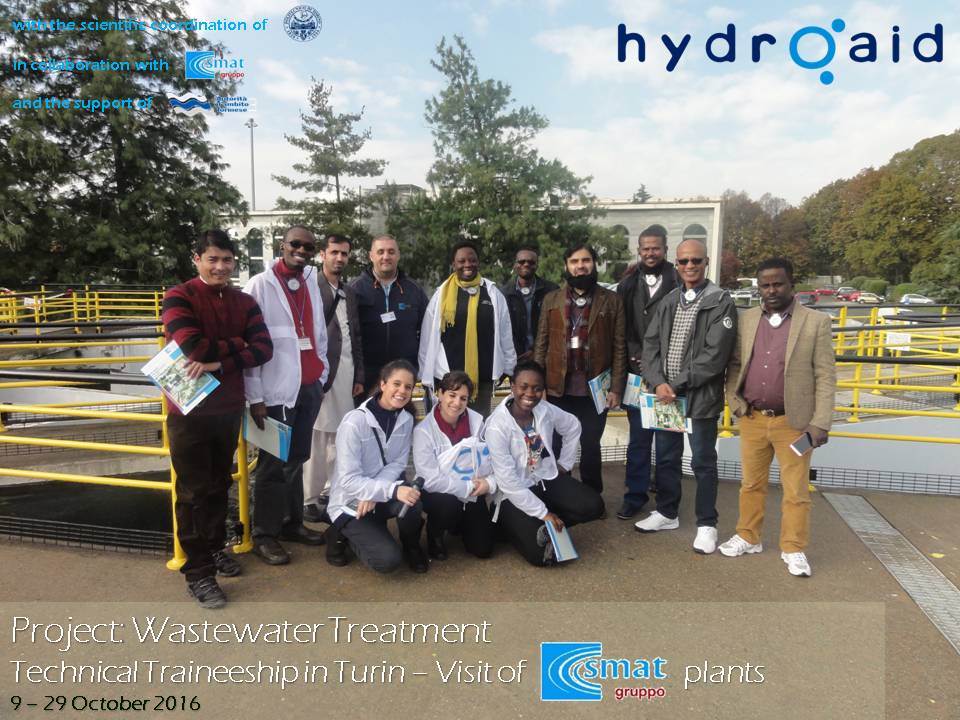 SMAT is an established leader in the field of integrated water resource management thanks to its production and managerial systems, among the most advanced in Europe and the world. How does the mission of SMAT engage with the cooperation initiatives promoted by the local territory? SMAT has always been very sensitive to all the international initiatives promoted by the territory and it often acted as the “technical arm” of the local institutions aiming to develop international initiatives in different countries. This close involvement has always been regarded as an important feature of the company as it allows a direct interchange with different realities which is the real trigger for improvement for all involved stakeholders.
Besides economic and financial goals, the issues of social responsibility and environment protection are a core part of SMAT policies for the management of public water. In developing and emerging countries, increasingly high growth index tend to fuel human pressures on natural resources. How can the experience of SMAT contribute to relief the contradiction between the rising water demand and the vulnerability of environmental systems? The experience of SMAT in this regard can certainly be a great help, as the solution of problems connected to water distribution, as well as with collection and treatment of solid waste, is a complex challenge that requires merging components from technical, administrative, maintenance and regulatory resources. The exchange with a public utility characterized by a vertical structure for managing all these aspects allows a comparison and the application of best practices that can be replicated in different contexts.
SMAT is a founding member of Hydroaid and in the past 15 years it played an active role in the cooperation actions realized by the Association. Do you believe this collaboration contributed to reinforcing the international standing of the local territory in a field where public policies and governance models are essential elements for achieving sustainable development? I am unable to answer with certainty whether the activity developed by SMAT through Hydroaid have accomplished the goal of enhancing the international standing of the territory. However I know that this cooperation did raise the awareness and the capacity of the local stakeholders in presenting themselves in the international scenario. I personally believe this is already a great result for the operators of a traditionally closed field.  Your lecture is dedicated to the economic regulation of integrated water services. In your opinion, what are the main challenges that the target countries involved in the project will face - in social, economic and environmental terms - to ensure access to efficient and sustainable services?
The clear challenge here is matching infrastructure plans adequate to the needs of the countries with tariffs that are sustainable for the population. As the water service is a vital one, as all essential services it is important that it is offered at a sustainable cost. This is the great challenge that urban planning and economic regulation will have to deal with in order to obtain the right balance allowing the provision of services in line with the expectations of citizens and industries, as well as supported by the contributive capacities of the users. Our team is deeply saddened to communicate that Professor Giuseppe Genon, our friend and collaborator, has passed away on Friday. Professor Genon had been suffering from illness while keeping up with his work at the Politecnico di Torino and in the ongoing course "Wastewater Treatment and Management of Urban Solid Waste" of Hydroaid. As many of you remember, he has been our collaborator for several years: preparing, delivering and tutoring outstanding training programs. In addition to this, those who had the privilege of meeting him in person know he was also a dedicate and kind person, who had his students truly at heart and strived for bringing real contributions with his profession. His passing is the loss of an exceptional individual who did a lot for many. We will all miss him and send our thoughts and prayers to his family at this time of grief.  |
Archives
April 2024
Categories |
 RSS Feed
Location
|
Contact Us
|